
In the fast-paced world of healthcare administration, managing a thriving practice requires more than just excellent patient care. A major financial bottleneck for many clinics is dealing with rejected or delayed paperwork. Mastering how to reduce medical claim denials is essential for maintaining predictable revenue and ensuring the financial health of your medical practice.
When insurance payers reject claims, it creates massive administrative friction, delays cash flow, and increases accounts receivable (A/R) days. At Fortify RCM, we help medical practices streamline their billing pipelines, eliminate recurring rejections, and secure fast reimbursements.
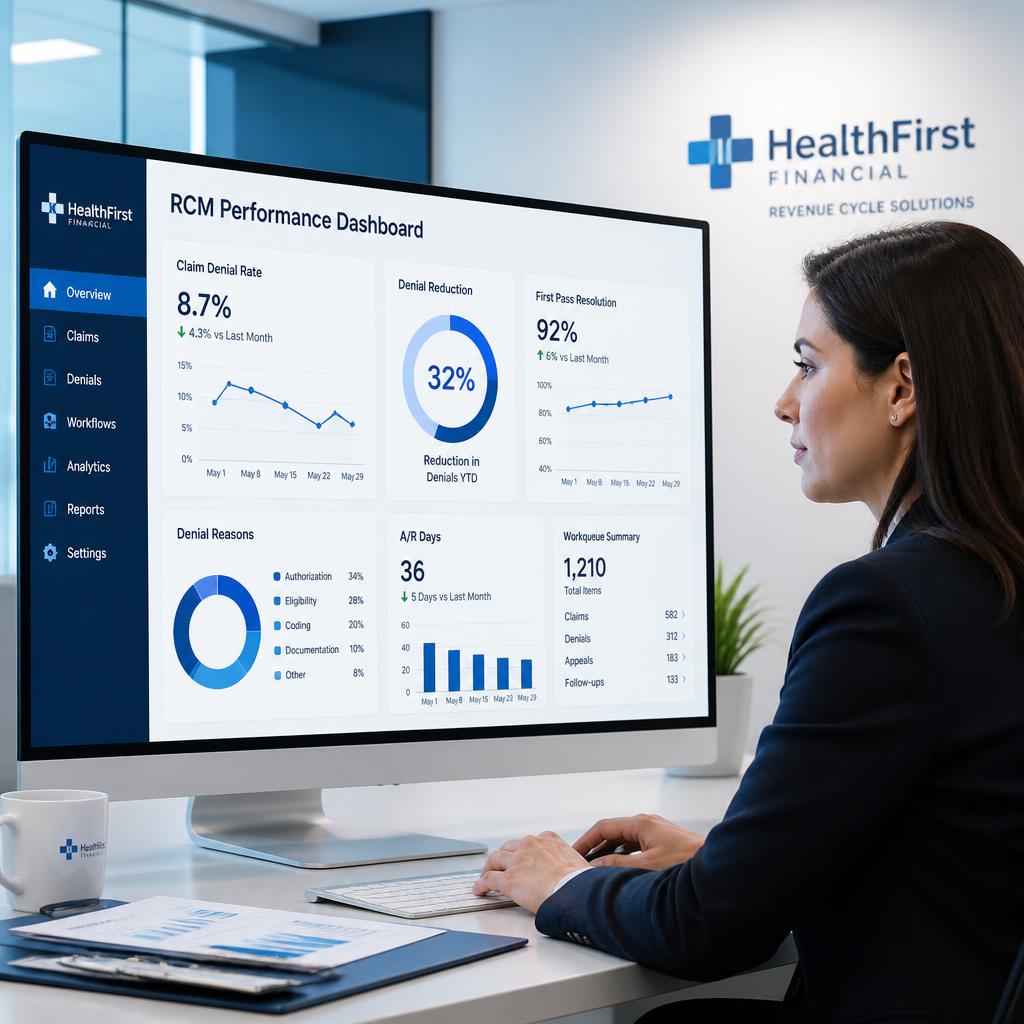
How to Reduce Medical Claim Denials: Essential Strategies
Managing claim denials is more than just fixing rejected paperwork — it is the backbone of a healthy revenue cycle. For medical practices, high denial rates mean delayed cash flow, increased administrative overhead, and frustrated staff caught in endless appeals.
Without proper tracking and denial management strategies, practices risk losing thousands of dollars in legitimate revenue every single month. At Fortify RCM, we help you identify root causes, correct billing errors proactively, and secure the full reimbursements your practice has earned.
Our expert approach helps healthcare professionals streamline their billing workflows, minimize recurring rejections, and protect their practice’s financial health for long-term success.
7 Best Steps to Reduce Medical Claim Denials
To protect your revenue cycle and minimize lost reimbursements, medical practices must implement a structured, data-driven workflow. Learning how to reduce medical claim denials effectively requires following these 7 key operational steps that streamline billing accuracy and maximize cash flow:
- Verify Patient Eligibility & Benefits Immediately: Always check insurance coverage and policy limits prior to the patient’s appointment to prevent eligibility-related rejections.
- Maintain Accurate Patient Demographics: Ensure spellings, dates of birth, active policy numbers, and group IDs are entered correctly during front-desk registration.
- Implement Rigorous Pre-Submission Audits: Run automated billing checks before dispatching claims to catch missing modifiers, coding mismatches, or invalid data fields.
- Ensure Complete Clinical Documentation: Provide robust supporting notes, medical necessity proofs, and diagnostic codes to satisfy payer requirements fully.
- Stay Updated with Payer Guidelines: Regularly review shifting insurance rules, fee schedules, and coverage policies to avoid compliance gaps.
- Track and Analyze Denial Trends: Categorize recurring rejection reasons using tracking dashboards to spot systemic operational bottlenecks.
- Establish a Fast Appeals & Resubmission Protocol: Act quickly on denied claims by creating a dedicated workflow to correct errors and refile within strict payer timelines.
Common Causes of Medical Claim Denials
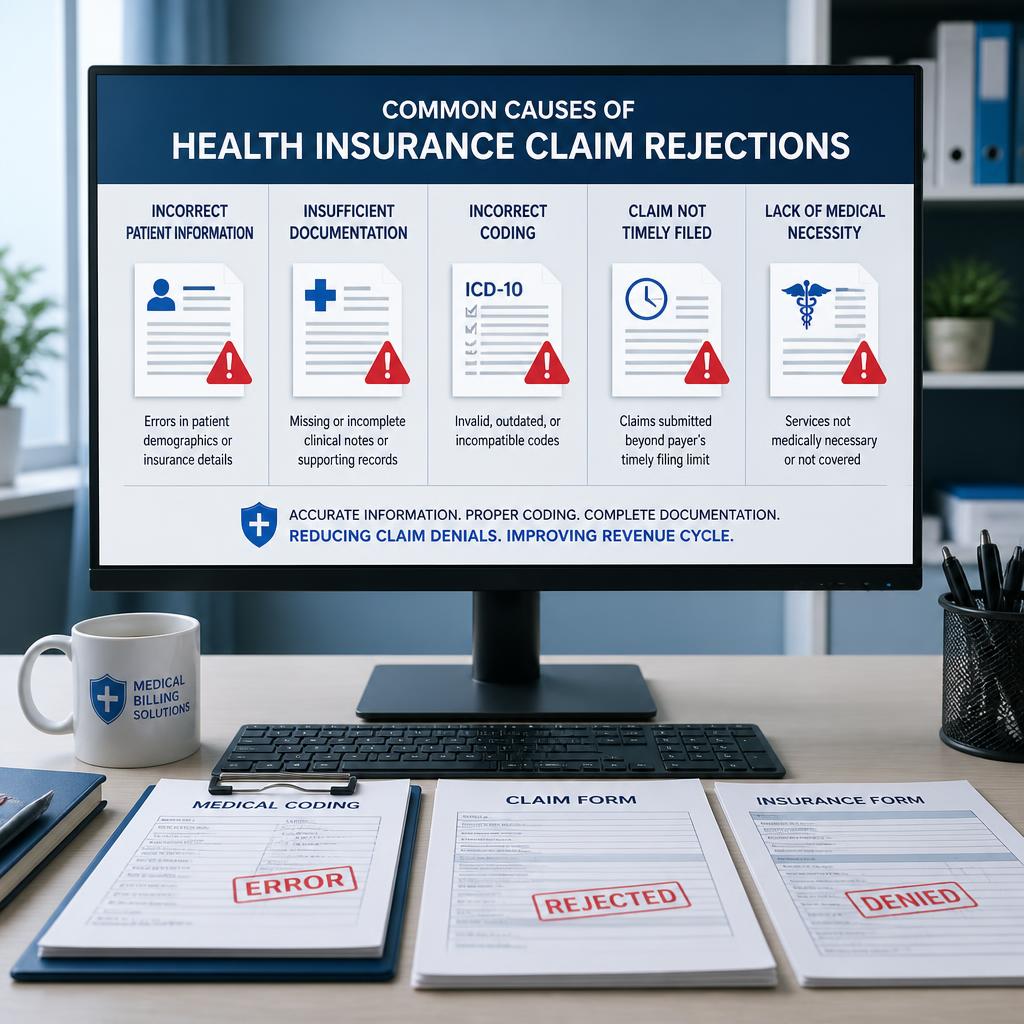
To successfully minimize claim rejections and safeguard your incoming revenue while figuring out how to reduce medical claim denials, medical practices must first recognize the underlying triggers. Here are the primary root causes behind insurance claims getting sent back:
- Patient Policy & Coverage Discrepancies: This happens when coverage plans have expired, patient enrollment status has lapsed, or treatments fall completely outside the scope of what the health plan agrees to reimburse.
- Demographic Data Inaccuracies: Minor keyboard entry mistakes involving patient spelling, birthdates, group numbers, or incorrect insurance identification digits.
- Clinical Coding Errors and Missing Modifiers: Utilizing outdated CPT codes, inaccurate ICD-10 diagnostic entries, or neglecting to include mandatory billing modifiers.
- Delayed or Late Submissions: Transmitting medical claims past the strict filing windows enforced by commercial and government insurance carriers.
- Insufficient Clinical Documentation: Omitting required medical records, practitioner notes, or proof of medical necessity demanded by payers to evaluate claims.
How Fortify RCM Helps You Overcome Claim Denials
Healthcare providers often experience severe revenue losses as a result of tangled payer policies, delayed clinical clearances, and recurring clerical mistakes. Understanding how to reduce medical claim denials with specialized administrative backing ensures your practice avoids long payment cycles or absolute financial write-offs.
Here is how our tailored revenue cycle framework resolves these operational bottlenecks for your facility:
- Comprehensive Claim Pre-Screening: Deep software evaluations and manual quality audits catch medical coding flaws, incorrect modifiers, and patient profile mismatches long before files get dispatched.
- Advanced Pre-Authorization Tracking: Our dedicated team handles all necessary prior approvals well ahead of schedule, ensuring you never face unexpected payment blocks or refused services.
- Proactive Receivables & Dispute Resolution: Our expert recovery group thoroughly reviews every rejected claim file, applies exact corrections, and launches rapid appeals to secure the maximum possible reimbursement.
- Ongoing Operational Assessments: We constantly evaluate your clinic’s rejection trends to deploy permanent corrections right at the front-desk and medical billing checkpoints.
The Financial and Operational Impact of Reducing Denials

Efficient denial management directly influences your practice’s overall financial health and operational efficiency. When you resolve core billing errors and automate pre-submission checks, your practice experiences immediate benefits. Implementing proper strategies on how to reduce medical claim denials helps practices secure steady, predictable financial growth over time, while staying compliant with updated CMS Guidelines regarding healthcare documentation:
- Faster Cash Flow and Reduced A/R Days: Clean claims get processed and paid much faster by insurance carriers, eliminating extended accounts receivable cycles.
- Lower Administrative Costs: Your billing and front-desk staff spend less time chasing rejected claims, fixing appeals, and making repeated calls to payers.
- Higher First-Pass Clean Claim Rates: Approvals happen on the first attempt, significantly reducing revenue leakage and write-offs.
- Long-Term Practice Growth: Predictable, steady reimbursements allow you to invest more in patient care, advanced technology, and practice expansion.
Why Choose Fortify RCM for Denial Management
When it comes to reducing medical claim denials, experience, accuracy, and proactive workflows matter. Fortify RCM stands out as a trusted partner for healthcare professionals seeking end-to-end revenue cycle optimization and denial management support.
Here’s why medical practices choose us:
- ✅ Comprehensive Expertise: We manage claim scrubbing and denials for all types of specialties — from solo practices to large group clinics — ensuring strict payer compliance.
- ✅ End-to-End Support: From initial pre-authorization to final appeal follow-ups, we handle every step so your team can focus entirely on patient care.
- ✅ Error-Free Submissions: Our advanced quality checks minimize claim rejections and coding errors, speeding up your cash flow.
- ✅ Transparent Communication: You’re always updated on your denial recovery metrics and accounts receivable (A/R) progress tracking.
- ✅ Free RCM Audit Offer: Enjoy a comprehensive initial revenue cycle audit and strategy session when you partner with us for denial management.
By choosing Fortify RCM, you’re not just fixing rejected paperwork — you’re partnering with a dedicated team committed to securing your earned revenue and helping your practice thrive.
Medical Specialties We Serve
At Fortify RCM, our medical billing and denial management services are tailored to meet the unique needs of every healthcare speciality. Whether you’re an independent provider or part of a growing medical group, we ensure clean claim submissions and aggressive revenue recovery across all fields.
Mental Health Providers
Credentialing and billing for psychologists, therapists, counselors, and social workers in private or group practice.
Nutritionists & Dietitians
Specialized RCM and credentialing support for MNT providers, licensed dietitians, and wellness nutritionists.
Occupational Therapists
End-to-end billing and enrollment services for pediatric and adult OT clinics and independent therapists.
Non-Emergency Medical Transportation (NEMT)
We handle Medicaid credentialing, EDI setup, and claims billing for NEMT providers.
Home Health Agencies
Complete RCM services tailored for HHAs including Medicare credentialing, OASIS billing, and claims management.
Skilled Nursing Facilities (SNFs)
Credentialing, billing, and AR support for SNFs—compliant with payer-specific guidelines and long-term care needs.
Applied Behavior Analysis (ABA)
We support ABA therapy providers with credentialing, insurance billing, authorization and appeals for denied behavioral health claims.
Chiropractors & Physical Therapists
Credentialing and billing help for musculoskeletal therapy, rehab clinics, and solo practitioners.
Durable Medical Equipment (DME) Providers
We handle Medicare/Medicaid credentialing, EDI setup, and claims submission for DME suppliers.
Nurse Practitioners & Physician Assistants
Complete credentialing and billing support for NPs & PAs operating independently or in group practices.
Dentists & Oral Health Providers
Support with dental insurance credentialing and claims processing for general dentists and specialists.
Vision & Eye Care Specialists
Credentialing and RCM services for optometrists, ophthalmologists, and vision therapy providers.
FAQs: How to Reduce Medical Claim Denials
Q1: What exactly is classified as a medical claim denial?
Answer: A medical claim denial occurs when an insurance carrier receives a submitted billing file, processes it through adjudication, but formally refuses reimbursement due to coverage limits, coding discrepancies, or missing clinical records.
Q2: Why do claim rejections severely impact a clinic’s financial stability?
Answer: Unresolved claim rejections freeze incoming cash flow, extend accounts receivable (A/R) cycles, and burden staff with costly administrative rework. Mastering how to reduce medical claim denials stops ongoing revenue leakages and stabilizes practice growth.
Q3: What trigger points most frequently cause insurance claims to bounce back?
Answer: The primary triggers include lapsed patient insurance policies, typos in demographic registration, outdated CPT or ICD-10 diagnostic codes, missing prior authorization numbers, and missed filing deadline limits.
Q4: How can medical offices actively lower their rejection percentages?
Answer: Medical offices can lower rejections by verifying patient insurance eligibility prior to appointments, deploying pre-submission claim scrubbers, and updating coding protocols. Knowing how to reduce medical claim denials at front-desk entry points significantly boosts clean claim submission rates.
Q5: Is there a major difference between a claim rejection and a denial?
Answer: Yes. A rejection happens before processing when a clearinghouse or payer flags data formatting mistakes (which can be edited and refiled quickly). A denial occurs after full payer evaluation, requiring formal dispute resolution or clinical documentation appeals.
Q6: How do clearinghouse automated scrubbing systems assist billing teams?
Answer: Automated scrubbers evaluate claims against current payer rules prior to dispatch to flag missing modifiers, invalid diagnostic links, or incorrect identifiers. Utilizing these digital tools is a core method for practices examining how to reduce medical claim denials efficiently.
Q7: Why are prior authorizations critical for preventing lost revenue?
Answer: Prior authorization confirms that an insurer agrees to cover a specific medical treatment before care is delivered. Implementing proactive pre-authorizations is essential when establishing how to reduce medical claim denials linked to medical necessity conditions.
Q8: Within what timeframe should rejected or bounced claims be investigated?
Answer: Billing teams should investigate and correct rejected claims within 24 to 48 hours of notification. Establishing fast review procedures is a critical operational step in how to reduce medical claim denials before strict payer resubmission windows expire.
Q9: Can Fortify RCM customize denial workflows for specific medical practices?
Answer: Absolutely. Fortify RCM tailors claim scrubbing, billing audits, and appeal protocols according to your medical specialty and payer matrix. Our specialists guide your team on how to reduce medical claim denials while maximizing total monthly reimbursements.
Q10: What is the initial step to begin collaborating with Fortify RCM?
Answer: The initial step is booking a complimentary revenue cycle audit and strategy consultation. Our team assesses your existing denial trends, identifies administrative bottlenecks, and designs a streamlined billing roadmap to protect your incoming revenue.
Answer: A medical claim denial occurs when an insurance carrier receives a submitted billing file, processes it through adjudication, but formally refuses reimbursement due to coverage limits, coding discrepancies, or missing clinical records.
Answer: Unresolved claim rejections freeze incoming cash flow, extend accounts receivable (A/R) cycles, and burden staff with costly administrative rework. Mastering how to reduce medical claim denials stops ongoing revenue leakages and stabilizes practice growth.
Answer: The primary triggers include lapsed patient insurance policies, typos in demographic registration, outdated CPT or ICD-10 diagnostic codes, missing prior authorization numbers, and missed filing deadline limits.
Answer: Medical offices can lower rejections by verifying patient insurance eligibility prior to appointments, deploying pre-submission claim scrubbers, and updating coding protocols. Knowing how to reduce medical claim denials at front-desk entry points significantly boosts clean claim submission rates.
Answer: Yes. A rejection happens before processing when a clearinghouse or payer flags data formatting mistakes (which can be edited and refiled quickly). A denial occurs after full payer evaluation, requiring formal dispute resolution or clinical documentation appeals.
Answer: Automated scrubbers evaluate claims against current payer rules prior to dispatch to flag missing modifiers, invalid diagnostic links, or incorrect identifiers. Utilizing these digital tools is a core method for practices examining how to reduce medical claim denials efficiently.
Answer: Prior authorization confirms that an insurer agrees to cover a specific medical treatment before care is delivered. Implementing proactive pre-authorizations is essential when establishing how to reduce medical claim denials linked to medical necessity conditions.
Answer: Billing teams should investigate and correct rejected claims within 24 to 48 hours of notification. Establishing fast review procedures is a critical operational step in how to reduce medical claim denials before strict payer resubmission windows expire.
Answer: Absolutely. Fortify RCM tailors claim scrubbing, billing audits, and appeal protocols according to your medical specialty and payer matrix. Our specialists guide your team on how to reduce medical claim denials while maximizing total monthly reimbursements.
Answer: The initial step is booking a complimentary revenue cycle audit and strategy consultation. Our team assesses your existing denial trends, identifies administrative bottlenecks, and designs a streamlined billing roadmap to protect your incoming revenue.
Ready to Reduce Claim Denials and Protect Your Revenue?
Dealing with recurring insurance rejections and delayed payments doesn’t have to slow down your medical practice. Discovering how to reduce medical claim denials through expert assistance guarantees faster cash flow and long-term stability. Our expert denial management and revenue cycle solutions streamline every step — from clean claim scrubbing to rapid appeals — so you can focus entirely on patient care.
- ✅ Free initial revenue cycle and denial audit when you partner with us.
- ✅ Faster cash flow, fewer rejections, and minimized A/R days.
- ✅ Ongoing support and aggressive follow-ups for commercial, Medicare, and Medicaid payers.
Start Optimizing Your Revenue Today! Contact us now to schedule a free consultation and let Fortify RCM eliminate your claim denials while your practice grows.